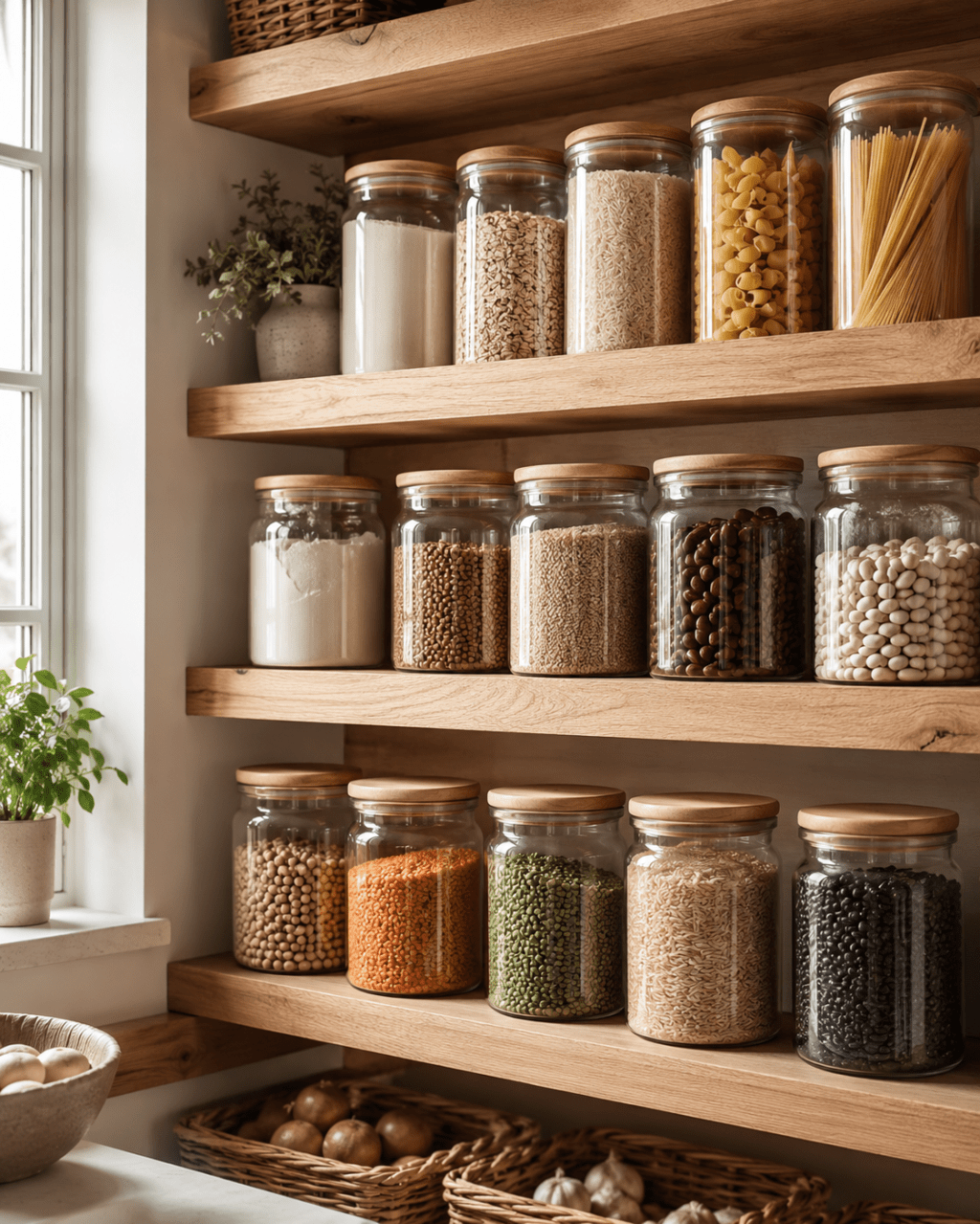
Nobody’s pantry actually looks like that. You know the one — the Pinterest pantry, all matching glass jars and calligraphy labels, where the quinoa and the lentils have apparently never once touched a plastic bag. It’s not real. It’s also, somehow, worth pursuing anyway, because the underlying idea isn’t vanity — it’s that a pantry system built around visibility actually makes you cook differently. You can’t forget you have three cans of chickpeas if you can see all three cans of chickpeas.
In a small kitchen, this matters more, not less. A cramped pantry with mismatched bags and boxes doesn’t just look chaotic — it actively hides what you own, which means you rebuy things you already have and let other things go stale in the back of a cabinet you can’t fully see into. Glass jars and a labeling system aren’t an aesthetic indulgence here. They’re inventory management for a space too small to forgive disorganization.
The Jars That Actually Seal
Most “pantry organization” starts and ends with buying jars, which is fine, except that a huge number of cheap glass jars either don’t seal properly or crack the first time you drop a lid. If you’re investing in a matching set, invest in one that actually holds a seal for dry goods.
Anchor Hocking makes glass canisters with genuinely airtight lids that keep flour and sugar fresh for months, not weeks, and they’re heavy enough to feel like they’ll survive your kitchen rather than the other way around.
If you want something a little more European-apothecary in feel, Le Parfait jars use a wire-bail and rubber-gasket seal that’s borderline overkill for storing pasta, in the best way.
A Labeling System That Isn’t Handwritten in Sharpie
There’s a specific kind of chaos that happens when you decant everything into identical jars and then have no idea which one is baking soda versus cornstarch. A proper label maker solves this in about four minutes and looks considerably less like a hostage situation than masking tape.
The Phomemo D30 is a compact, wireless label maker that connects to your phone, prints clean minimalist labels, and takes up less space in a drawer than a spice jar.
Bins for the Things That Refuse to Be Jarred
Not everything belongs in glass — snack bags, produce, and anything oddly shaped needs a bin, not a canister. The trick in a small pantry is choosing bins that stack and pull out cleanly, instead of the kind you have to excavate like a dig site.
iDesign Linus bins are clear, stackable, and fridge-safe, which means the same system can extend from your pantry shelf into your fridge without you having to think about it twice.
The Turntable Nobody Thinks They Need Until They Own One
A lazy Susan sounds like a novelty until you own a small, deep pantry shelf and realize you’ve been reaching blindly into the back of it for years. Spinning storage turns “unreachable” into “one twist away,” which in a small kitchen is the difference between using an ingredient and forgetting it exists.
The Copco Non-Skid Turntable is sturdy enough for heavy bottles and jars, and the non-skid base means it won’t go sliding every time you spin it.
The Actual Point
An organized pantry isn’t about performing tidiness for an audience that will never see it. It’s about being able to open a cabinet in a small kitchen and immediately know what you have, what you’re low on, and what’s been quietly expired since spring. Buy the jars that seal, label them properly, and let your pantry tell you the truth for once.
This post contains Amazon affiliate links. If you make a purchase through one of these links, I may earn a small commission at no additional cost to you.


Leave a Reply